|
|||||
Let's Explore
|
• Optics and Imaging Sensors:
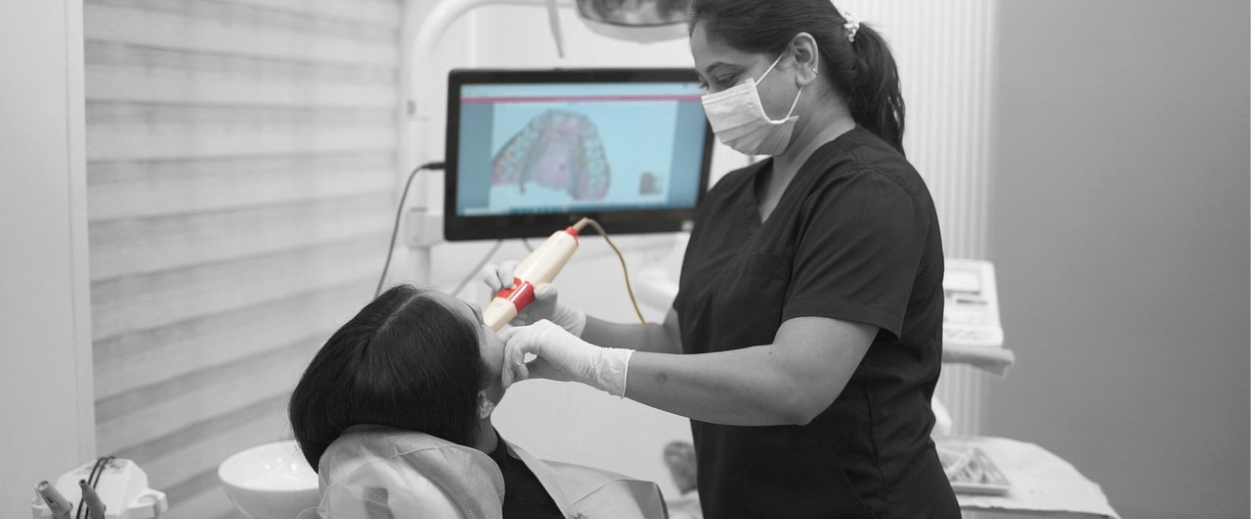
The scanner contains lenses and sensors that are specially designed to record fine surface details of teeth and soft tissues.
|
• Light Projection:
Patterns of structured light are projected onto surfaces. By analysing how these patterns distort when they hit the oral structures, the scanner builds a detailed 3D structure .
|
• Real-Time Capture:As the scanner moves within the mouth, images are stitched together instantly on-screen, giving the dentist visual confirmation of coverage.
|
• Multi-Axis Maneuverability:The slim and easy-to-manage tip ensures access even to posterior teeth and hard-to-reach areas.
|
• Software Processing:The captured data is refined using algorithms to correct motion artifacts and reflections, producing a seamless, high-resolution 3D model ready for diagnosis or CAD/CAM integration.
|
Why Consider Digital Impressions?
Compared to conventional techniques, intraoral scanners offer:
• Lasting Accuracy -
Eliminating voids, distortions, or discrepancies seen in traditional impressions.
|
• Improved Patient Comfort -
No trays, no setting materials — just a quick and comfortable scan.
|
• Time Efficiency -
Eliminates impression setting times, enhancing the efficiency of dental procedures.
|
• Streamlined Workflows -
Direct integration with CAD/CAM systems for quicker fabrication and delivery.
|
By combining science and simplicity, intraoral scanners don’t just replace conventional impressions; they elevate the entire dental experience for both clinicians and patients.
To bring this cutting-edge technology to your clinic
Trusted by Dentists Across India
. Intraoral Scanner Now
Follow Us: |
|
For More Information, Contact Us: +91 77770 87084 +91 77770 87084 info@illusiondentallab.com info@illusiondentallab.com www.illusionzirconia.com www.illusionzirconia.com |